Seeing God’s Love in a Life Marked by Suffering

A reader asks:

Is suffering a mystery? What is “redemptive” suffering? How is it different from penance?

I’m reflecting on my mother’s many sufferings. And my father’s too. At my worst moments, I begin to allow doubt to creep into my heart.

She would often say “keep walking, one foot in front of the other.” That was a sign of her great faith in God.

My father’s was that he was saying the rosary when he died in hospital after many years of pain and suffering.

I’m the youngest of eight. My father had a major stroke that left him hemiplegic six months before my birth. My mother was faced with a terrible situation since my father couldn’t work for at least a couple of years.

My father was stuck in a wheelchair chair for the last 8 years of his life. He died in hospital at 67.

My mother herself had a stroke and became hemiplegic a year after he died. She died 7 years later at age 69.

I had three legally blind siblings, a sister and two brothers. One of those brothers had schizophrenia and the other was autistic. The sister fell down a flight of stairs and died at age 58.

I feel as if listing this out makes it look like some kind of sick joke. But it isn’t, it all really happened. These 5 family members suffered the most yet had the deepest faith.

What is God’s plan?

“Thou indeed, O Lord, art just, if I plead with thee, but yet I will speak what is just to thee: Why doth the way of the wicked prosper: why is it well with all them that transgress, and do wickedly?” Jeremiah 12:1

Discipline and Refinement in Hebrews 12:5-11 states that God disciplines those He loves like a father chastens sons, producing righteousness and peace through endured suffering.

Testing Faith in 1 Peter 1:6-7 describes trials refining faith like gold in fire, proving its genuineness for praise at Christ’s return.

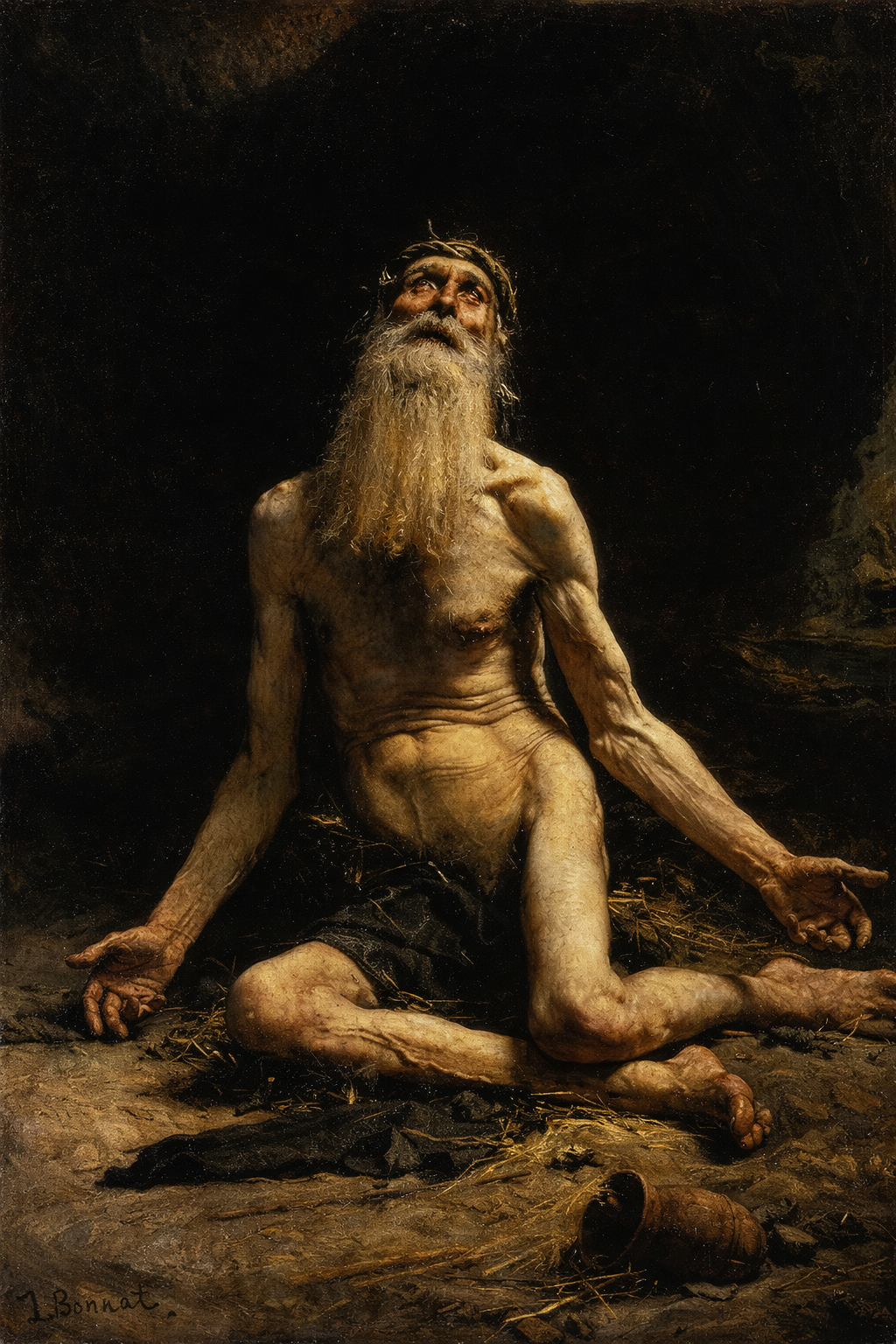
Job 1:1 portrays a blameless man tested to demonstrate unwavering devotion.

Participation in Christ in 1 Peter 4:12-13 urges not to be surprised by fiery trials but to rejoice as partakers in Christ’s sufferings for future joy. 2 Timothy 3:12 warns all godly in Christ face persecution.

Promise of Deliverance in Psalm 34:19 affirms many afflictions befall the righteous, yet the Lord delivers from them all.

We answer:

Suffering is a mystery, but not a sick joke and not nonsense. In your family I see something very specific: God allowed you all to live very close to the Cross.

You grew up with a father disabled by a major stroke before your birth, in a wheelchair for 8 years, dying at 67 saying the Rosary. A mother who faced all of this, then had her own stroke after his death, yet kept saying, “One foot in front of the other,” and died at 69. Three legally blind siblings. Schizophrenia. Autism. A sister who died at 58 from a fall.

When you list it out, it almost sounds absurd. That feeling is honest. It is what Job, Jeremiah, and the Psalmists felt: “Lord, this looks wrong.” But notice what you yourself saw: the ones who suffered most had the deepest faith. Your mother’s phrase is not just pep talk. It’s a spiritual stance: “I do not understand, but I will keep walking with God.” Your father dying with the Rosary in his hands is not an accident. That is a man clinging to Our Lady and Christ in the middle of what seems like defeat.

In Catholic terms, suffering is a “mystery” not because it is random, but because it is so deep we can know it truly, but not completely. We know some things clearly. Suffering enters the world through sin, through the Fall, but God does not enjoy our pain (see Lamentations 3:33). Christ did not come to avoid suffering, but to enter into it, pass through it, and conquer it. Scripture tells us suffering can discipline and refine us (Hebrews 12:5–11), prove and purify our faith like gold in the fire (1 Peter 1:6–7), unite us to Christ and His Cross (1 Peter 4:12–13), and be part of our path to holiness and heaven.

What we cannot see from here is the whole pattern. From our side, life looks like the back of a tapestry: knots, tangles, and loose ends. From God’s side, there is order and meaning. So yes, suffering is a mystery, but a saving mystery if it is joined to Christ, not a cosmic joke.

Now, redemptive suffering. Christ’s Passion and death are complete, sufficient, and perfect. We cannot add to the Cross in itself. Yet St Paul says something shocking: “I rejoice in my sufferings for your sake, and in my flesh I complete what is lacking in Christ’s afflictions, for the sake of his body, that is, the Church” (Colossians 1:24). Nothing is lacking in the value of Christ’s sufferings. What is “lacking” is our participation.

Redemptive suffering means: suffering that we freely offer to God, united to Jesus’ Passion, for love of Him and for the salvation and sanctification of souls. We try to live in a state of grace, going to confession when we fall. We consciously offer what hurts: “Jesus, I offer this to You. Use it as You will: for my own conversion, for my family, for souls.” We try to carry it with faith, even when emotionally we feel weak, tired, angry, or confused.

The Catechism says: “By his passion and death on the cross Christ has given a new meaning to suffering. It can now configure us to him and unite us with his redemptive passion” (CCC 1505, cf. 1521). That is exactly what I see in your family. Your father in that hospital, praying the Rosary through pain: that is redemptive suffering. Your mother, carrying her cross and simply “keeping walking”: that is redemptive suffering. Your blind, autistic, and mentally ill siblings, clinging to faith in the middle of a life that was objectively difficult and unfair: that is some of the deepest redemptive suffering in the Church. I am convinced that in heaven you will see how many souls were helped by their hidden crosses.

How is this different from penance? They are related, but not identical. Penance is something we do or accept to express sorrow for sin, and to repair, as far as we can, the temporal effects of sin. It is spiritual medicine that detaches us from sin and trains the will. It includes the penance the priest gives in confession, and also chosen things like fasting, sacrifices, extra prayer, and works of charity.

Redemptive suffering is wider. It includes all suffering, chosen or unchosen, that we offer to God in union with Christ: physical pain, emotional anguish, grief, loneliness, humiliation, chronic illness, mental burdens, interior darkness. It can be offered not only for ourselves, but for others, for the Church, for souls in purgatory.

Where they meet is here: any suffering you accept with faith and offer to God becomes both penitential (purifying you and making up, in a small way, for sin) and redemptive (participating in Christ’s saving work for others). Your parents did not choose their strokes, their disabilities, or the deaths in your family, but by enduring them with faith in God, their suffering became both penance and participation in Christ’s redemption.

The Scriptures you quoted are right on target. Jeremiah 12:1, “Why do the wicked prosper?”, is you standing before God saying, “Lord, You are just, but this looks unjust.” That is not disrespect. That is biblical prayer. Hebrews 12:5–11 speaks of God disciplining His sons. Not every tragedy is a direct punishment for a specific fault, but God uses suffering to train, purify, and mature those He loves, like a father who forms his sons to be strong and virtuous. 1 Peter 1:6–7 says our faith is tested like gold in fire. The purpose of fire is not to destroy the gold but to purify it. Your family’s faith was being stripped of illusions and cheap comforts, so that what remained was solid and genuine. 1 Peter 4:12–13 and 2 Timothy 3:12 say clearly that those who belong to Christ will share in His sufferings. A serious Christian life will not be soft. Your family, in a real sense, was allowed to stand very close to Christ on Calvary.

Psalm 34:19 says, “The Lord delivers him out of them all.” You could look at your parents’ deaths and say, “But they weren’t delivered. They suffered and died.” The key is that deliverance is not only healing in this life. Sometimes God delivers us from suffering, sometimes through suffering, and finally by suffering, into eternal life. If your parents died in God’s grace, trusting Him, then He has delivered them from all sickness, all fear, all limitation.

Now your own life fits into this. There are many people in hell right now who did not live as many years as you have. Many who did not receive the graces, formation, and examples of faith that you have received. And yet you still live… and you still suffer. That is not God forgetting you. That is God showing you His love in a hard but very real way: He is giving you time to be purified here, to repair for sin here, to grow in love here. He is offering you the chance not only to lessen your time in purgatory, but to arrive in heaven with a greater capacity for glory and love. Yes, it is tough. But most things worth doing are, and this is the greatest work of all: becoming a saint. Hold on to this thought in your darkest hours: “God has left me on this earth, with these sufferings, because He wants me closer to Him forever, not farther away.”

A man raised in a house of suffering and faith has not had a random upbringing. God is usually forming a deeper heart in him. You are being prepared to have real compassion, to stand by other people’s crosses, and to turn your own pain and questions into intercession. You can pray something like: “Lord, I do not fully understand why You allowed all this in my family. I give You the confusion, the sadness, the questions. Unite them to Your Cross. Use them for my parents, my siblings, and the souls most in need of Your mercy. Jesus, I trust in You. Help my lack of trust.” That prayer itself is an act of redemptive suffering of the heart.

When doubt creeps in, remember: temptation to doubt is not the same as losing the faith. Your duty as a Catholic man is not to feel strong all the time, but to remain faithful: one foot in front of the other. Stay close to the sacraments, especially Mass and confession. When doubts or dark thoughts come, repeat: “Jesus, I trust in You,” and “Lord, I believe; help my unbelief” (Mark 9:24). Use the Psalms of lament, like Psalms 13, 22, 42–43, to pray your pain in God’s own words. If possible, talk to a solid priest who understands redemptive suffering and won’t brush off your questions with shallow answers.

Finally, some simple concrete ways to live this. Make a short Morning Offering: “O Jesus, through the Immaculate Heart of Mary, I offer You all my prayers, works, joys, and sufferings of this day…” That one habit turns everything into an offering. When memories of your parents and siblings hurt, say: “Lord, I unite this pain with Your Cross. Use it as You wish.” Ask for their help: “Lord, if they are with You, let them pray for me. If they still need purification, use my prayers and sufferings for them.” Pray the Rosary, especially the Sorrowful and Glorious Mysteries, with your family in mind.

Your family story is not a cruel joke. It is a share in the mystery of the Cross. You are allowed to question, to ache, to cry out like Jeremiah and Job. Just do not step away from Christ. Your father died holding the Rosary. Your mother kept walking when surrender would have been easier. Now it is your turn to carry that same faith, one foot in front of the other, and to let your own questions and pain become part of Christ’s work of redemption and the story of your own eternal glory.
Is it a sin to file bankruptcy?

A reader asks:

This is heavy on my heart and I plan to meet with a priest, but I’ve decided after much internal debate that I need to file bankruptcy. I want to go to confession as well and while I can talk to the priest there, I wonder what to think about and reflect on in terms of the nature of the sin here. This was largely all due to survival and a lot of difficult circumstances.

We respond:

Yes—Catholic moral theology does speak of this, under two headings:

  1. Prodigality (profligacy) itself, and
  2. The injustice of not paying one’s debts.

1. Prodigality / Profligacy

Classically, the opposite of the virtue of liberality is prodigality: wasting or scattering money without reasonable care.

McHugh & Callan define it this way:

“The vice opposed to liberality by excess in giving is prodigality, which is an insufficient regard for temporal things and an extravagant bestowal of them on others.”

They note that:

  • By its nature, prodigality is ordinarily a venial sin, because:
    • we aren’t absolute owners of our goods, only stewards before God,
    • but wasting them doesn’t necessarily injure anyone else.
  • But it can become mortal from its circumstances, for example:
    • when the purpose is gravely sinful (e.g., paying for seduction or bribery), or
    • when the consequences are grave, “wastefulness which makes one unable to pay debts or assist a relative who is in grave need”.

So:

Spending more than is reasonable, so that you can’t pay basic obligations, is exactly the case they give where prodigality turns into grave sin.

2. Not paying debts

Under the 7th Commandment (“Thou shalt not steal”), Catholic catechesis explicitly includes non-payment of debts as a sin against justice. Spirago’s Catechism Explained lists, among sins against the 7th Commandment:

“The Seventh Commandment expressly forbids: theft, robbery, cheating, usury, injuring the property of another, detention of goods that have been found or lent, and the nonpayment of debts.”

He adds that we are in danger of mortal sin when what we wrongfully withhold is enough to seriously affect the other’s ability to live in a manner suited to his state.

So:

  • Freely choosing to spend in such a way that you know you will not pay your creditors is a sin against commutative justice (you’re withholding what is strictly due) and can be mortal if the amount or harm is serious.
  • That is more than “just” prodigality; it’s basically a kind of theft/fraud by omission, because debt-repayment has moral priority over luxuries and non-necessary spending.

3. What if you honestly cannot pay?

The tradition makes some important distinctions so people don’t despair.

Jone explains that when someone is truly insolvent (bankrupt), physical or moral impossibility can postpone, or if permanent, even remit the obligation for now:

  • Restitution (including paying debts) is morally impossible if paying would put the debtor in really grave need (e.g., he could not modestly support himself and his family according to their state in life).
  • In a just bankruptcy, the debtor may keep what is needed for modest support and a small means of livelihood, and may not make new donations or take on further debts.
  • If later he comes into substantial means, he is ordinarily still bound in conscience to pay back his creditors unless they freely forgive the debt.

So there’s a difference between:

  • Malicious / reckless overspending that knowingly sacrifices creditors and dependents (grave sin), and
  • Honest misfortune or miscalculation, where you now truly cannot pay; then your duty is to:
    • live simply,
    • not waste money,
    • do what you reasonably can over time to satisfy debts,
    • and not take on further unnecessary debt.

Putting it together

So to answer your question directly:

  • Yes, there is what you’re calling a “sin of profligacy”: the Church calls it prodigality, a vice opposed to the virtue of liberality.
  • By itself, careless overspending is generally venially sinful;
  • But when that spending causes serious inability to pay just debts or to provide for those you’re bound to help, it becomes a grave sin against justice, not only against prudence.

If this is something that worries your conscience right now, a good approach is:

  1. Bring it to confession frankly (including any known debts neglected through your own fault).
  2. Make a simple plan to live more modestly and to repay what you reasonably can, step by step.
  3. Avoid new unnecessary spending or debts until justice is substantially restored.

If you’d like, you can tell me (in general terms) what kind of debts and spending you’re dealing with, and I can help you think through how traditional moral theology would look at your specific situation.

A Cautionary Tale of Courtship

A reader asks for advice:

Looking for advice on what to do or not to do:

My husbands very close twin brother started dating and is now engaged with a novus ordo Catholic girl who has a very demanding job in medicine.

Since their courtship he has developed more left wing inclinations to suit her and her family (they openly mock people who vote right wing), so this time he cast a white ballot to effectively not upset anyone at all, even though one year ago he would have easily voted right as he did all his life. Needless to say she also made various excuses for CK’s murder, and my brother in law too (too provocative, hateful)..

He has also started to completely alter his life, livelihood, etc around the girl’s job, inclinations, preferences. He used to regularly post about how much homemakers are beloved, and wanted a traditional family, but now deleted his fb and all social media not to appear offensive. The novus ordo priests giving them advice don’t seem to really see any of this, and just encourage them going forward with the wedding.

I understand this as not my life, not my domain, but it obviously hurts my husband as they have been close all their life radically change his values. I wonder if there is a way to somehow make someone realize they are altering everything about themselves to fit in and going against values they used to possess.

I understand it’s hard to find a good woman these days and that can lead to a lot of concessions, but when it is a sacrament like marriage, I can’t help but think he could be making a mistake or not being forthcoming about what values he has.

I ultimately trust God, but if anyone has advice or has been in a similar position I’d love to hear it.

1. Marriage Is Not Just Personal—It’s Spiritual and Communal

Marriage isn’t a private emotional adventure. It’s a public, spiritual vocation. It’s a sacrament, not a lifestyle choice, and that means it’s not just about two people liking each other—it’s about two souls aligning their lives to glorify God through self-sacrifice, fruitfulness, and unity in truth.

So when a man starts shifting his political views, spiritual life, public convictions, and even deletes his past in order to “not offend” a woman and her family before the vows have even been exchanged—what do you think will happen after the wedding?

This isn’t a case of love inspiring a man to grow. This is appeasement, plain and simple. It’s a subtle kind of idolatry. He’s making her, and her approval, his god.


2. Your Instinct Is Right: This Is Not Healthy Submission, It’s Erosion

When a man changes his entire worldview, deletes his social convictions, and gives up speaking the truth in order to gain acceptance, that is not love—it’s a prelude to enslavement. He is building his house on sand.

And let’s not sugarcoat it—there’s a very real spiritual battle here. When a woman mocks your values, makes excuses for the murder of a faithful man like CK (I assume you’re referring to Fr. Chad King), and has no reverence for right-ordered masculinity, then you have a moral obligation to question whether this is a prudent match for marriage.

If this woman is already demanding total lifestyle surrender before marriage, what will happen when she has full legal and social leverage?


3. The Novus Ordo Factor

Now, I say this with due reverence for all valid sacraments, but the Novus Ordo culture often downplays sin, avoids confrontation, and embraces sentimentality over sound doctrine. Many priests today have been trained to avoid making “judgmental” statements, even when someone’s soul is in clear danger. If their priestly counsel amounts to, “Just follow your heart,” that is not pastoral care—it’s abandonment.

Do not be surprised if these priests bless this union with a smile, even if it’s being built on the bones of compromise and cowardice.


4. What Should You Do?

You’re right—it’s not your domain to intervene directly. But you are not powerless.

Here are the do’s and don’ts:

Do Speak to Your Husband

Let him know that you see how deeply it pains him to watch his brother drift. Remind him of the strength of their bond, and encourage him to lovingly—but firmly—speak to his brother while there’s still time. Brother to brother.

“I love you. I respect your freedom. But I’ve seen you change in ways that don’t look like growth, they look like fear. I’m worried you’re giving up things that made you strong—and you may wake up one day wondering whose life you’re even living.”

That’s not judgment. That’s fraternal correction, which is a spiritual work of mercy.

Don’t Nag or Gossip

You and your husband must not let this devolve into murmuring behind his back. Either you confront the issue in love, or you entrust it fully to prayer. Bitterness and mockery—even if justified—only poison the well.

Do Pray and Fast for Him

Prayer isn’t a fallback option. It’s front-line combat. You and your husband should start praying specifically for clarity, courage, and conviction for his brother. A 9-day novena to St. Joseph or to St. Michael the Archangel would be fitting here. Fast from something you enjoy as an act of love and intercession.

Do Watch How This Woman Treats Men

If she mocks conservative values, excuses violence against outspoken men, and demands her preferences dominate her fiancé’s life, she’s not seeking partnership—she’s seeking dominance. And her politics are likely not the problem—they’re the symptom of a deeper worldview where the man is not the head, but the pet.


5. If the Wedding Proceeds

If it goes forward, your role will be to support your husband in navigating the fallout that may come. Be a calm and respectful presence, and let your own marriage be a living witness of what a strong, traditional union looks like. The beauty of holy marriage preaches louder than a hundred arguments.


6. Final Words

You’re right: it is hard to find a good woman today. But that’s no excuse for a man to forget who he is. If you trade your integrity for intimacy, your conscience for comfort, or your faith for approval—you’ve already lost before the marriage even begins.

But remember: the story isn’t over. Even men who fall into error can wake up. But waking up usually takes pain—and some men don’t listen until the pain gets louder than the delusion.

So love him. Pray for him. Speak with honor and clarity. And then stand back and let God do what only He can do.


You’re doing the right thing by asking this. Now do the next right thing: pray, speak truth, and let your own family shine as a model of what holy order looks like.

Discerning God’s Will

A reader asks:

What are some clear signs when discerning a decision?

We have a life decision as a family to make and we’ve been searching for an answer for the better part of 4 years with no clear signs. It feels as though we are living in some kind of limbo waiting for some kind of sign from God. We are restless and uneasy with the situation we currently have. I’ve always thought that when you’re making the right decision in Gods perfect time, that doors will be opened, the right people will be put in your path etc. And when it’s not the right time doors will be slammed in your face and no matter how much you fight, you won’t get anywhere. Is that accurate? Or will there be situations where you’re forced to tear down doors and try to make the impossible, possible?

1. Discerning God’s Will Is Not Passive—It Requires Action and Peace

There’s a common mistake in our circles: waiting passively for a “sign from Heaven” while the roof leaks and the kids are growing. God’s will is not usually revealed in fireworks or prophetic dreams. More often, it’s revealed through ordered desire, peace, circumstances, and moral clarity.

As St. Ignatius of Loyola put it: “God’s will is known through consolation and desolation.” That is:

  • When you imagine walking through a certain door, do you experience peace—even if it’s scary or sacrificial?
  • When you cling to the status quo, is it true peace, or is it avoidance, fear, or despair?

Restlessness is a sign. Not always that something is wrong morally, but that something is incomplete. God stirs the heart to prevent us from settling into false peace.


2. Doors Opening and Closing: Truth or Myth?

You’re right in thinking that God will sometimes open doors when it’s His time. But here’s the critical part:

Sometimes God leaves the door closed to see if you’re willing to knock hard enough to prove your faith and leadership.

That’s not contradiction—it’s Scripture:

“Ask, and it shall be given you; seek, and ye shall find; knock, and it shall be opened unto you.” (Matt 7:7)

He doesn’t say, “Wait by the door until I open it.” He says knock. That’s action. That’s faith.

In some seasons, you will have to tear down a door, as you said—but only when you’re sure it’s the right house.

So, is it accurate to believe:

  • Open doors mean “go”? ✅ Yes, often.
  • Closed doors mean “stop”? ⚠️ Not always.
  • Sometimes God waits for you to lead in faith and knock? ✅ Absolutely.

3. Four Marks of a God-Guided Decision

Here’s a framework you can use to test if it’s time to move:

1. Is it morally sound?

This is non-negotiable. Is the decision consistent with the teachings of the Church, your duties as a husband and father, and your role as protector and provider?

If yes, proceed.

2. Does it bring greater order to your family?

God’s will always moves us toward order, not chaos. Even if it’s difficult or sacrificial, will this decision:

  • Strengthen your marriage?
  • Provide a more stable environment for your children?
  • Allow you to fulfill your God-given vocation more fully?

If yes, that’s a green light.

3. Is there peace in your heart?

Not the peace of comfort—but the peace of conviction. The kind you feel before stepping onto a battlefield because it’s the right fight.

If your heart is restless from avoidance, it’s time to move.

4. Are you staying put out of fear?

Fear is not from God. Prudence is from God. But fear that paralyzes the will is the devil’s tool. Satan doesn’t need you to commit mortal sin—he just needs you stuck.

If fear is holding you back, it’s time to fast, pray, and then act.


4. What Would You Advise Your Own Son If He Were in Your Shoes?

This is a sobering question I ask myself often. If my grown son came to me with this same dilemma, what would I tell him?

That’s your mirror. That’s your clarity.

If you would tell your son, “Son, it’s time to make a move. It’s been long enough. Trust God and lead your family,” then there’s your answer.


5. Final Thoughts: God Trusts You to Lead

God gave you the authority in your home. You don’t need a neon sign from Heaven. You need prayer, prudence, and boldness. If you’ve been faithful in prayer, you’ve already been given more than most.

So here’s the challenge:

  • Stop waiting for peace to fall on you like a blanket. Peace follows obedience.
  • Make the best decision you can with what you have. God will guide your steps once you start moving.
  • And if a door slams hard? You’ll know it’s not the one. But don’t wait for it to open magically.

God doesn’t guide parked cars. Start driving—He’ll steer.

The Conclave No One Is Talking About – Welcome to Tradition with Charles Fraune – Episode 48

We discuss the 1775 Papal Conclave, focusing on St. Alphonsus Liguori’s significant role and the political factions influencing the election of Pope Pius VI. We discuss the conclave’s length, the challenges faced, and the parallels to the contemporary Church, concluding with a call for listeners to prioritize personal holiness through prayer and spiritual practices. More about Charles Fraune here:

How much of the TLM is left in the NO? Welcome to Tradition Episode 47 – Matthew Hazell

If you are interested in the liturgy of the Catholic Church, you’ll love this episode.

I’m interviewing Matthew Hazell about the differences between the new and old liturgy. We explore: -The suspicious editing of the scriptural readings in the new liturgy -Specific examples of what has been excluded and what is skipped -The rather unusual changes made to many of the prayers said by the priests -The differences between what V2 ordered to be done and what was actually done

And much more…

The Truth About the Pagan Origins of Catholicism – Welcome to Tradition Episode 46

Jim de Piante is back and has a lot to say, including: -Why he thinks it’s a good thing the Nativity is celebrated on Dec 25 (Sol Invictus/Winter Equinox) -The pagan origins of priests, virgins and sacrificial rituals -Whether it’s okay to burn Hindu incense in your home

Your TLM Got Cancelled; Now What? Kennedy Hall joins Welcome to Tradition Episode 44

I’m joined by Kennedy Hall to discuss a pressing issue for many people; what to do when your TLM is canceled?

We discuss: -The origins of the Sunday obligation -The purpose of canon law -Whether you can attend a liturgy with heretics, schismatics or where eucharistic abuses are present -Can you go to Mass at: SSPX, independent chapels, sedevacantists or Eastern Orthodox -What current canon law and the CCC say about all this

Praying Like the Saints – Intro to Mental Prayer – Episode 43

Everyone is familiar with Vocal Prayer (prayers using words), but the Saints say if we’re serious about attaining heaven, we must learn to meditate.

In this episode, we discuss: What mental prayer is -How to meditate -Different techniques the Saints recommend -Strategies to overcome distractions -When to bring something up to your spiritual director Plus, what you can expect in your spiritual life and in your daily secular life as a result of committing to mental prayer.

Tradition Draws Occultists to the Church – Charles Fraune – WTT Episode 42

Why are former occultists converting to tradition? What are the key reasons these men and women don’t just convert to Catholicism, but seek out the TLM and traditional devotions?

Join Charles Fraune and I for a fascinating conversation about these topics and more, including the devotion and special practice that freed Charles from a years-long spiritual impediment.